

More Than a JSA. A Connected View of Job Risk.
Job Safety Analyses are only valuable if they are accurate, current, accessible—and actually used.
GSC On-Site Services combines more than 40 years of injury prevention experience with proven job-analysis methodology and Fulcrum technology to transform traditional JSAs into a connected, searchable source of safety intelligence.
We don't just document the hazards.
We help you understand where the risk is, how often it occurs, how severe it could be, and where your organization should focus first.
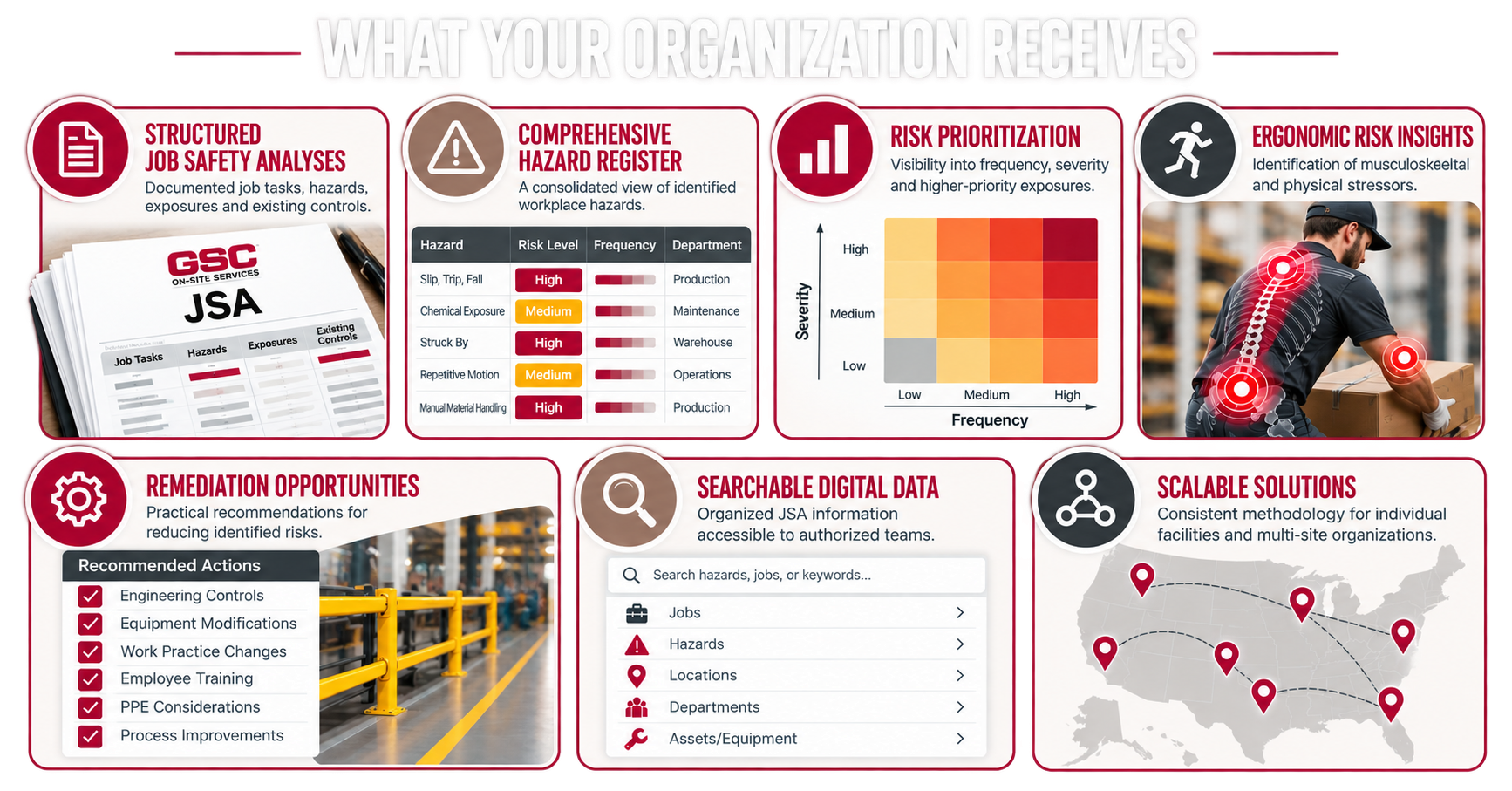
From a single site to a multi-location operation, GSC helps turn disconnected JSA documents into a structured database your Safety, EHS, Operations and leadership teams can use to make better decisions.
Know the Job. Identify the Risk. Prioritize the Solution.
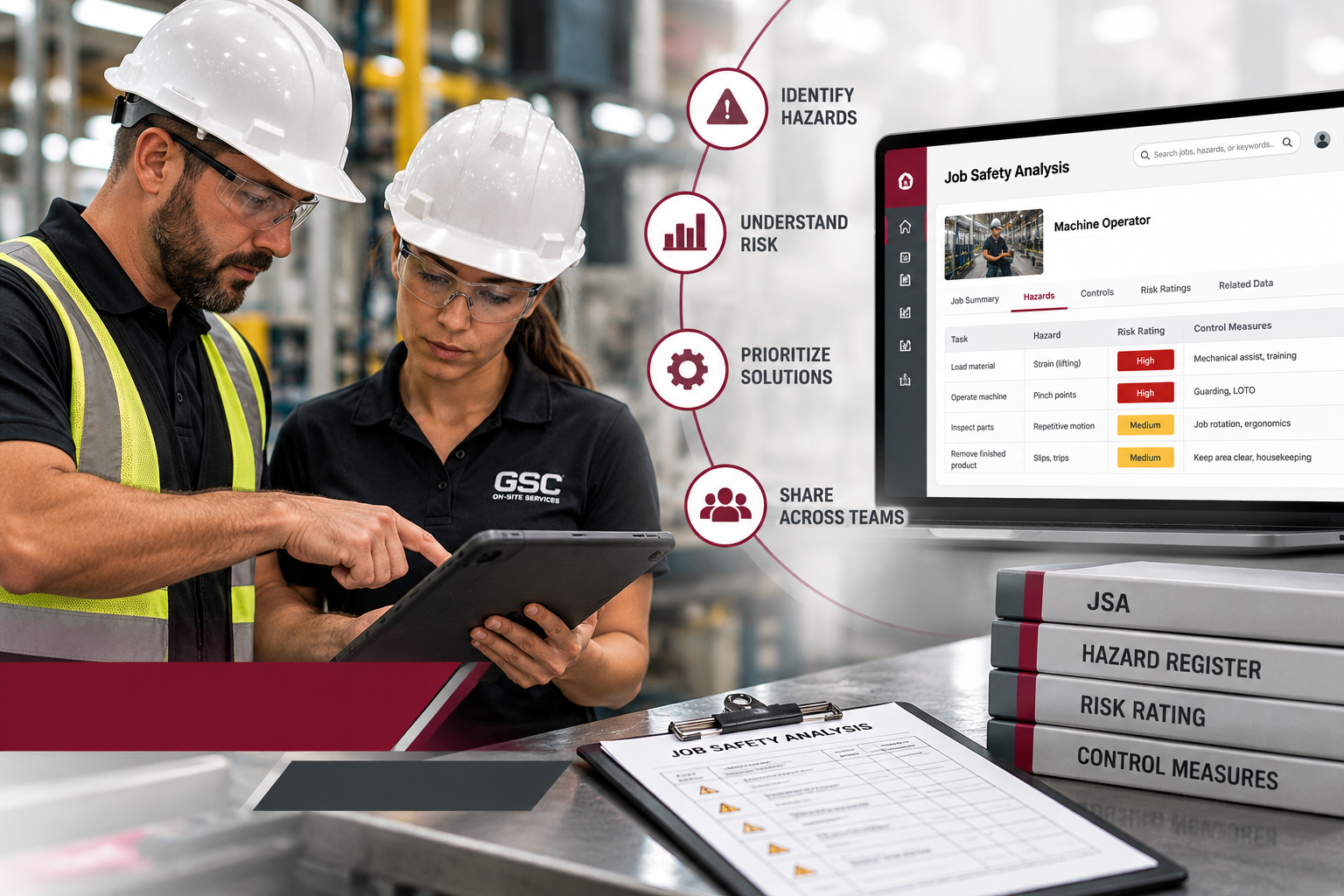
THE GSC JSA METHODOLOGY
EXPERIENCE + METHODOLOGY + TECHNOLOGY
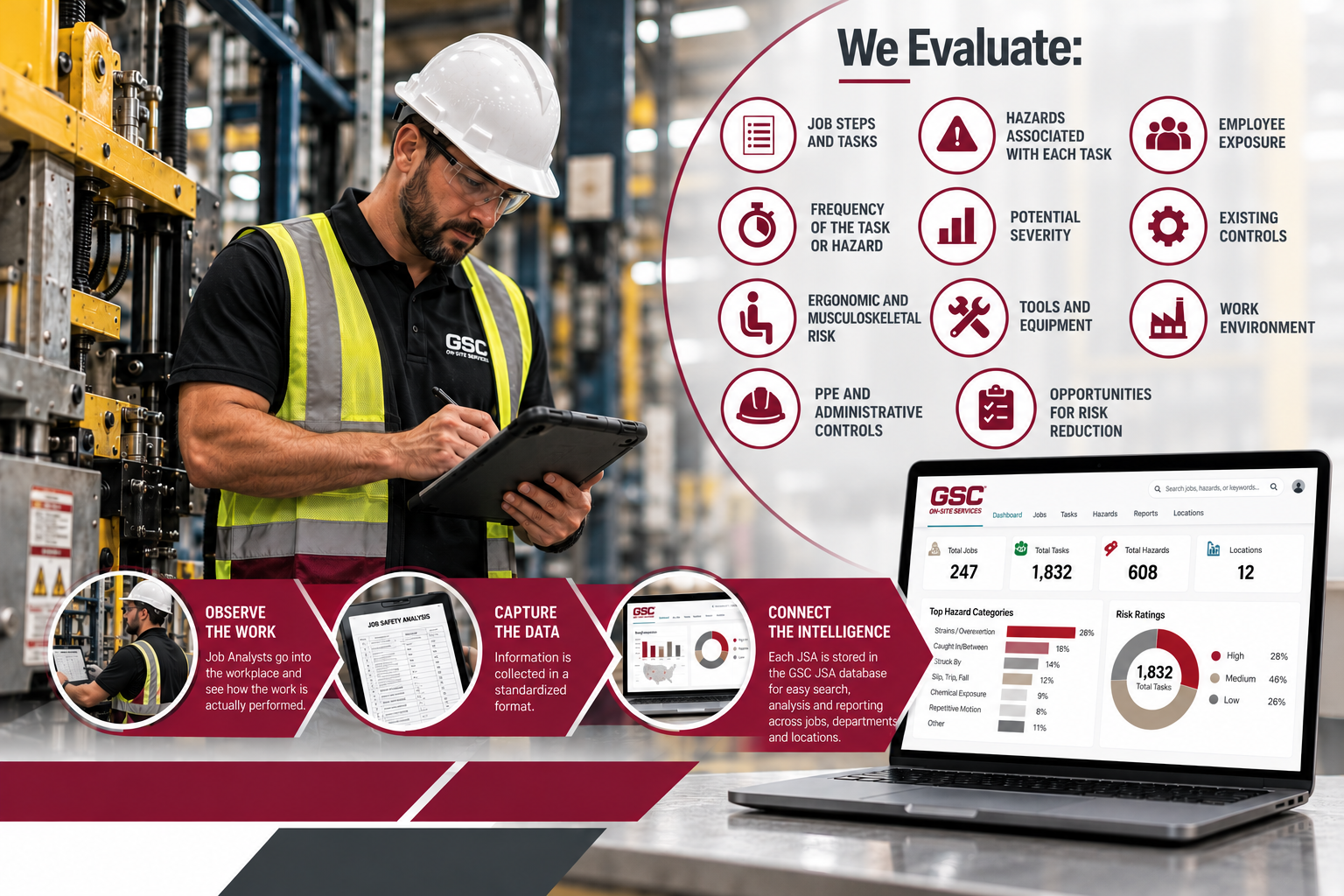
INTELLIGENT RISK PRIORITIZATION
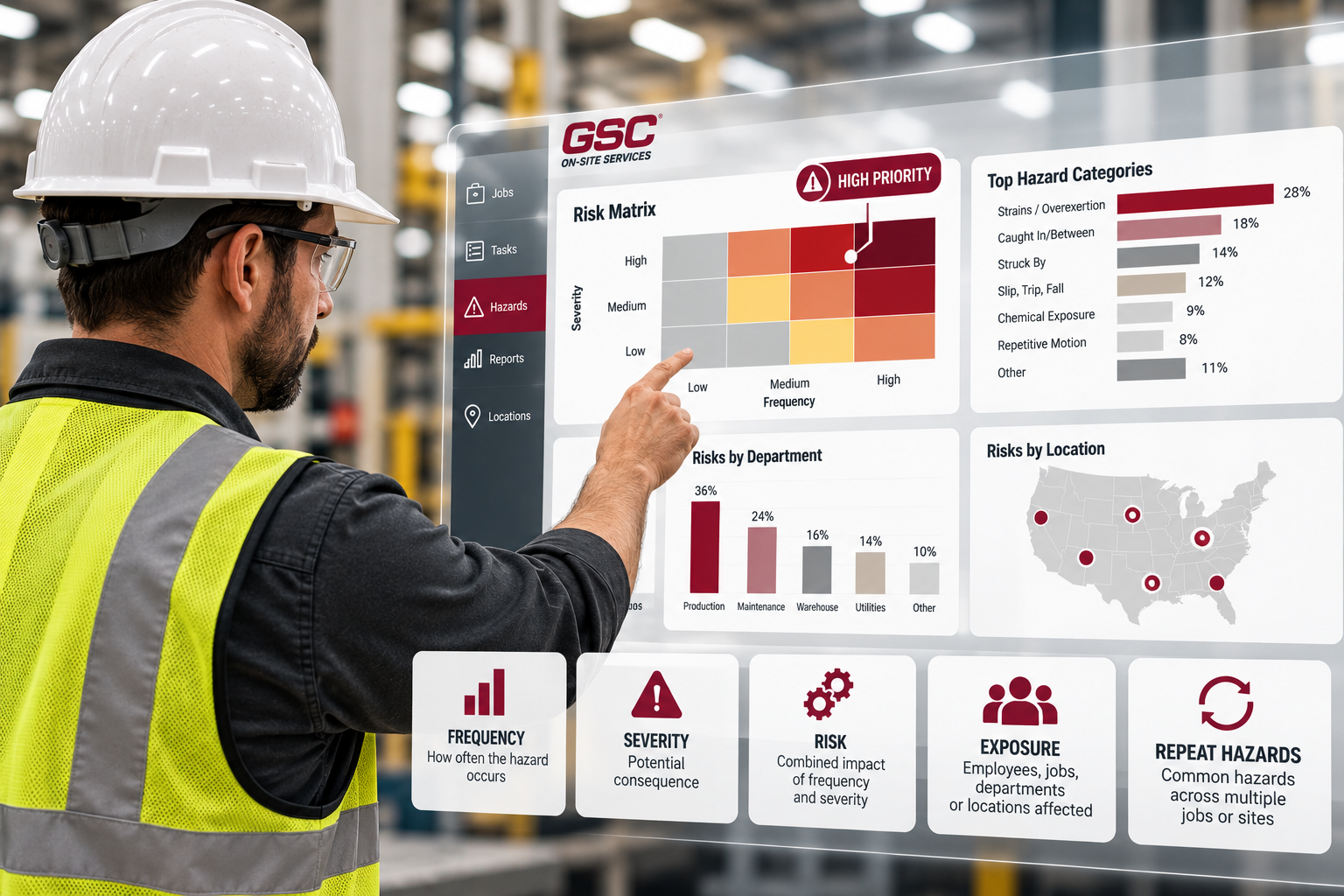
Know Where the Risk Is. Focus Where It Matters Most.
Not all workplace hazards carry the same level of risk. GSC transforms JSA data into actionable intelligence, helping organizations identify patterns, compare exposures and focus resources where they can have the greatest impact.
Go Beyond Individual JSA Documents
Analyze workplace risk through:
Frequency & Severity — Identify how often hazards occur and their potential consequences.
Employee Exposure — Understand how many employees, jobs or locations may be affected.
Recurring Hazards — Recognize common risks across tasks and facilities.
Risk Prioritization — Identify higher-risk exposures that need attention.
Organizational Visibility — Compare risk across departments, locations and jobs.
Discover how the GSC Workforce Management System™ connects JSA data, job demands and risk intelligence to support smarter workforce decisions.
FROM RISK INTELLIGENCE TO ACTION
One Job. Multiple Decisions. Connected Data.
Identifying workplace hazards is only the beginning. The real value comes from using that information to make improvements.
GSC connects job-risk information with practical remediation opportunities, helping organizations move from identifying hazards to prioritizing solutions.
Turn Findings Into Improvements
Depending on the identified risks, recommendations may include engineering controls, ergonomic improvements, equipment modifications, work-practice changes, employee training, PPE considerations and process improvements.
Connect Safety With Workforce Decisions
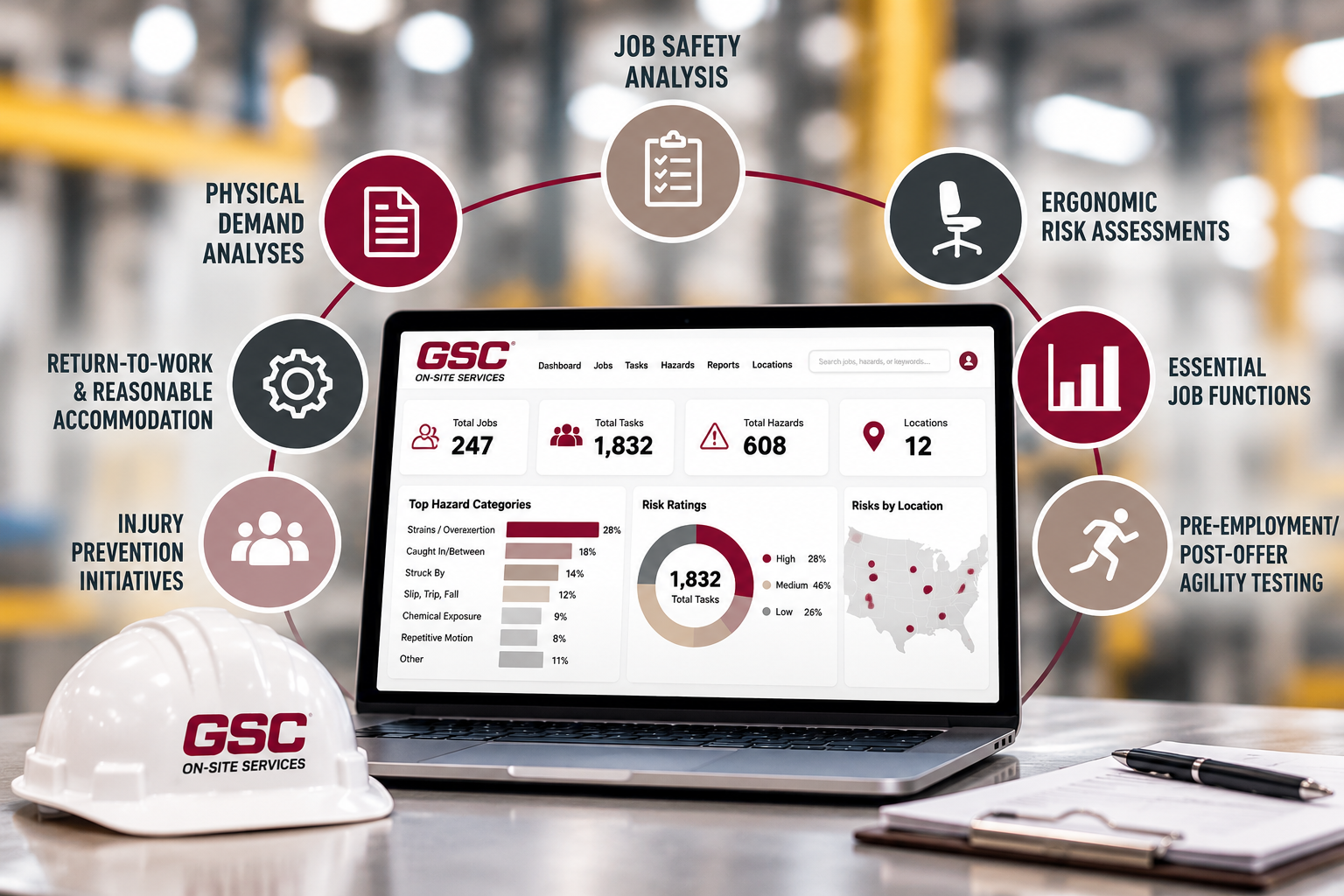
Through the GSC Workforce Management System™, JSA information can connect with other job-related data, including:
Physical Demand Analyses
Ergonomic Risk Assessments
Essential Job Functions
Injury Prevention Initiatives
Return-to-Work and Reasonable Accommodation
Pre-Employment/Post-Offer Agility Testing
This connected approach helps departments make more informed decisions using a consistent understanding of the job.
One Source of Information. Multiple Opportunities for Improvement.
THE GSC DIFFERENCE
40+ Years of Experience. Proven Methodology. Connected Technology.
GSC isn't a technology company that decided to offer Job Safety Analyses.
We're an injury prevention company that understands the work behind the data.
With more than 40 years of combined experience in injury prevention, ergonomics, movement science and industrial job analysis, GSC combines hands-on expertise with standardized methodology and Fulcrum technology to deliver meaningful, defensible job-risk information.
Built for the Teams Making Workforce Decisions
EHS & Safety — Identify hazards and prioritize prevention efforts.
Operations & Engineering — Evaluate opportunities for process, equipment and workplace improvements.
HR & Occupational Health — Better understand job requirements and associated risks.
Leadership — Gain visibility into risk trends and make informed resource-allocation decisions.
Whether you're starting with 10 JSAs or standardizing hundreds across multiple locations, GSC helps create consistent, accessible job-risk information your organization can actually use.
Don't Just Complete Your JSAs. Use Them.
JSA Questions, Answered.
-
A Job Safety Analysis (JSA) systematically breaks a job into tasks or steps, identifies the hazards associated with those tasks, evaluates the level of risk and identifies appropriate controls or corrective actions.
-
JSAs can be time-consuming and difficult to standardize across departments or locations. GSC brings experienced Job Analysts into the workplace to observe how jobs are actually performed and translate those observations into structured, usable data.
-
Yes. GSC can work with an organization's existing JSA format or provide a standardized GSC approach. The objective is to capture the information consistently while creating data that can be used beyond an individual document.
-
GSC combines hands-on job analysis with technology. Instead of treating each JSA as an isolated document, information can be structured within a database so it can be searched, sorted and analyzed across jobs, tasks, hazards and locations.
-
Yes. GSC's structured JSA data can be organized using factors such as frequency, severity and risk to help identify higher-priority exposures and recurring hazards.
-
Yes. The technology platform supports multi-site data organization, allowing organizations to build a more standardized view of job risk across locations.
-
Yes. This is one of the key advantages of GSC's connected approach. Physical demands and safety hazards are different types of information, but both are connected to the same thing—the job. GSC's technology creates opportunities to connect these datasets and give HR, EHS, Operations and leadership a more complete picture of the work.
-
No. GSC's services can be used independently or connected together. An organization can use GSC for JSAs, PDAs, Injury Prevention Services, Agility Testing or a combination of services based on its needs.
-
Yes. Your organization's data remains your data. GSC provides access to the information so your team can use it as a resource for safety and operational decision-making.

CORPORATE EHS MANAGER
"The PDA assessments provided by GSC are an exceptional tool that will support our ergonomic manual material movement initiative and return-to-work programs. Originally developed to baseline job demands for our agility testing program, they have proven to be invaluable across multiple safety and workforce initiatives."